Wordscapes In Bloom
- 4.7
- Rating
- 1.00M
- Installs
- Free
- Price
 Analysis by App-foxy
I spent time with Wordscapes In Bloom as a relaxed word game rather than treating it like a serious language course. That distinction matters. Its appeal is the small, satisfying challenge of finding words from a limited group of letters, then returning for another round when you have a few quiet minutes. It is made by PeopleFun, and it sits firmly in the casual word-game space: easy to understand, quick to start, and comfortable for players who enjoy solving at their own pace.
The game is free to install and is suitable for Everyone, so it is an approachable choice for families and casual players. The current version is 1.12.1, and it supports devices running Android 6.0 or later. Its store summary presents it as a brain-challenging word game designed to keep you playing, but my experience is more measured: it is best when you want a gentle mental workout with a clear stopping point, not when you are looking for a deep puzzle system or a competitive multiplayer experience.
How the free model affects its value
The most important cost detail is straightforward: the game is free to play, while optional in-app purchases range from $0.99 to $49.99 per item. That gives new players a sensible way to judge the experience before spending anything. I could begin with no financial commitment, learn how the puzzles feel, and decide whether the extra purchase options were relevant to my habits.
You May Also Like

 Blood Strike: 2.5 Anniversary
Blood Strike’s Loadouts Turn Every Drop Into a Tactical Gamble
A close look at Blood Strike’s custom loadouts: how fast access to signature weapons reshapes its battle royale rhythm, rewards preparation, and narrows the gap between fights.

 Pandora - Music & Podcasts
Pandora’s Music Is Easy to Start, but Harder to Recover
Pandora’s strength is its low-effort path from a seed to a station. Its weak spot is how much confidence it asks you to place in connection, setup, and quiet recovery.

 8 Ball Pool
 Is Built on Rivalries, Rematches, and Routine
A close look at the rivalries, rematches, shared routines, and unanswered safety questions that turn a quick pool match into a persistent mobile community.

 Samsung Music
’s Quiet Strength Is Playing What You Already Own
Its reach comes less from spectacle than from dependable access to a personal library. That simplicity is both the app’s strongest retention engine and its ceiling.

 AccuWeather: Weather Radar
AccuWeather Review: A Quick, Clear Forecast for Everyday Decisions
For everyday plans, the best forecast is the one you can understand quickly. AccuWeather makes rain timing, radar, and local conditions easy to act on, with a few trade-offs.

 Hill Climb Racing
Why Hill Climb Racing Still Turns Crashes Into One More Run
A tiny car, a bumpy hill and one more upgrade: Hill Climb Racing keeps resurfacing because its simple chaos makes every near-miss feel personal.
More From Our News Desk



That free entry point is meaningful for this type of game. Word puzzles are personal; some people enjoy searching for every possible answer, while others lose interest after a few rounds. A free download lets you discover which group you belong to. I would not recommend buying anything immediately. Play naturally first, notice whether you actually return to the game, and only then consider whether an optional purchase solves a problem you regularly encounter.
The listed purchase range is wide enough that value depends on restraint. A small optional purchase may feel reasonable to someone who plays often, but a larger item should be judged against how much use you expect to get from it. The game does not become automatically better because money is spent. Its basic attraction is already present in the free version: forming words, completing the visible puzzle structure, and enjoying the feeling of progress.
I also appreciate that the free price makes it easier to recommend as a low-risk time filler. If you are waiting for an appointment, taking a short break, or winding down before bed, you can try it without first deciding whether a paid download deserves space on your phone. The trade-off is that players who dislike optional spending in free games may feel more comfortable with a one-time paid word puzzle instead.
The central puzzle rhythm
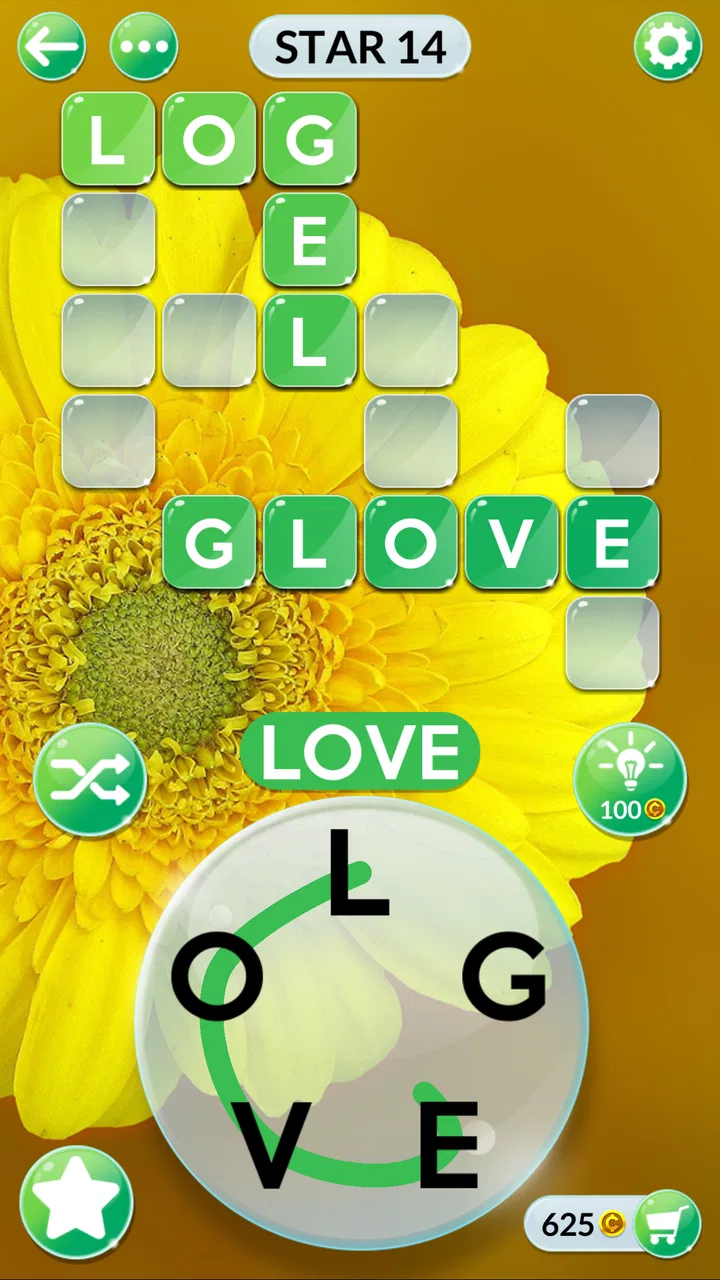
The core loop is deliberately simple. You receive a group of letters and work out which words fit the puzzle. Some answers appear quickly, while others require rearranging your thinking and testing combinations you would not normally consider. That balance is what makes the game pleasant: the first discoveries provide momentum, and the harder entries give you a reason to keep looking.
I found the strongest sessions happened when I stopped trying to solve everything in one burst. A useful approach is to enter the obvious short words first, then use the remaining letters as clues. Once the easy spaces are filled, the shape of the unfinished puzzle narrows the possibilities. This is more effective than staring at the entire letter group and waiting for one perfect idea to arrive.
Another practical habit is to treat unusual words as possibilities rather than dismissing them immediately. Word games often reward players who explore beyond everyday vocabulary, and a word that feels unlikely can become the missing piece. I would not describe the game as a vocabulary lesson in the formal sense, but it does encourage curiosity about spelling and word patterns.
The game works particularly well for short sessions because each puzzle gives you a compact objective. You do not need to remember a complicated story, manage a large collection, or coordinate with other players. That makes it easy to pick up after a break. It also means the experience can feel repetitive if you want constant novelty, since the basic action remains focused on discovering words from letters.
Small strategies that make difficult rounds less frustrating
When I became stuck, I found it useful to change the question. Instead of asking, “What word can I make?” I asked, “Which letters have not been used, and what common endings could they form?” Looking for familiar patterns such as plural endings or short connecting words can break a mental block. This is a simple technique, but it prevents random guessing from taking over.
I also recommend leaving a difficult puzzle for later rather than immediately using assistance. A short pause often helps more than repeated tapping because the answer becomes easier to see after your attention has moved elsewhere. If you return and still cannot solve it, then an aid may feel more worthwhile. This approach protects the satisfaction of solving puzzles yourself while keeping the game from becoming an irritating test of patience.
Players who want to improve their word recognition can keep a mental note of recurring letter arrangements. For example, once you notice how a particular group of letters can produce several related forms, future puzzles become quicker. That is one of the quieter strengths of this game: progress is not only about completing the current board, but also about training yourself to inspect letters more flexibly.
There is a trade-off here. A player who enjoys discovery may find these techniques rewarding, while someone who expects every answer to be obvious may consider the less familiar vocabulary unfair. The game is better suited to people who can accept occasional uncertainty and enjoy exploring possibilities without needing every word to be immediately recognizable.
What the game delivers beyond a quick distraction
Its main value is concentration in a small package. I can play for a few minutes without committing to a large task, yet the activity still asks me to focus more than passive scrolling would. That makes it useful during low-energy moments when I want something engaging but not demanding enough to require a long uninterrupted session.
It can also serve as a gentle shared activity. Two people can look at the same letters and suggest possibilities, taking turns without needing a formal multiplayer mode. I would not present that as a competitive feature; it is simply a practical way to make a solo puzzle more social. This works especially well when one person spots short words and the other notices longer patterns.
For parents, the Everyone rating makes the game easier to consider for a broad household audience. Still, age suitability is not the same as guaranteed educational value. I would use it as a playful word activity, not as a replacement for structured reading or vocabulary practice. Children may enjoy the discovery process, but the experience will depend on their existing spelling confidence and patience with unfamiliar answers.
For adults, the game is most convincing as a break-time routine. I could imagine opening it during a commute, while waiting for food, or between household tasks. The important point is that the game does not demand a dramatic time investment. You can stop after a small amount of progress and return later without feeling that you have abandoned a complex campaign.
Where it compares well with other word games
Compared with a traditional crossword, this game feels more approachable because the available letters provide a clear starting point. A crossword can ask you to interpret clues, understand references, and work across intersecting answers. Here, the challenge is more focused on rearrangement, recognition, and persistence. I prefer this format when I want a puzzle without a large knowledge barrier.
Compared with a word-search game, the thinking process is different. Word searches reward visual scanning through a grid, while this experience asks me to generate possible words from a smaller set of letters. Players who enjoy spotting hidden strings may prefer a word search, but I find the letter-combination format more mentally active because it requires production rather than simple detection.
Compared with competitive word games, the calmer pace is a major advantage. There is no need to race another player or worry about making a move before a timer changes the situation. That makes it friendly to people who dislike pressure. On the other hand, anyone seeking head-to-head tension, live opponents, or a strong social layer may find it too solitary.
It also differs from a one-time paid puzzle collection in an important way. A paid alternative may feel cleaner for someone who wants to avoid optional purchases altogether. This free game is easier to sample, but the value question becomes personal: do you prefer trying without commitment, or paying once for a more defined purchase experience? Neither choice is automatically superior.
Trade-offs I noticed during regular play
The biggest limitation is repetition. The basic pleasure of finding words is dependable, but it is also narrow. If you play for long stretches every day, the pattern of letter groups and completed spaces may begin to feel familiar. I would use it in rotation with other activities rather than expecting it to remain my only source of puzzle entertainment.
The free-to-play structure is another consideration. Because optional items are available, players who are easily tempted by purchases should decide on a personal limit before playing. The free access is enough to evaluate the game, but the presence of paid options may be distracting for people who prefer a completely fixed-cost experience.
Vocabulary can create uneven difficulty. A puzzle may be hard not because the arrangement is clever, but because the expected word is outside your everyday language. That can be satisfying when you learn something new, yet frustrating when you feel the answer depends on guessing an obscure term. I would skip this game if you need every challenge to be based on familiar words.
There is also no substitute here for a full language-learning tool. The game can encourage spelling awareness and word recall, but it does not provide the structured explanations, lessons, or progression I would expect from an app designed to teach a language. Its purpose is entertainment with a mental challenge, and judging it by that standard gives a fairer result.
Who will get the most from it
I would recommend it to casual puzzle players who enjoy word formation more than trivia. It is a good match for someone who wants short, self-contained challenges and does not need a story, character system, or competitive ranking to stay interested. The free installation also makes it practical for anyone who wants to test a word game before paying for an alternative.
It is especially suitable for people who like gradual improvement. At first, you may rely on obvious combinations, but with practice you become faster at noticing prefixes, endings, repeated patterns, and less familiar arrangements. That learning curve is subtle rather than formal, which is why I see it as a satisfying side benefit instead of a promised educational program.
Families may also find a use for it as a cooperative screen activity. One person can suggest a word while another checks how it fits the puzzle. Because the game is easy to explain, there is little setup involved. I would still encourage parents to treat purchases carefully and to decide in advance whether optional spending is acceptable on the device.
I would tell highly competitive players to look elsewhere. If your ideal word game involves live matches, timed turns, or a visible opponent, this is unlikely to provide enough intensity. Likewise, players who want a rich narrative adventure or a constantly changing puzzle format may become bored with its focused structure.
My buy-or-skip verdict
Wordscapes In Bloom is worth trying because the entry cost is free and the central puzzle is immediately understandable. Its best qualities are accessibility, short-session convenience, and the quiet satisfaction of uncovering words that are not always obvious. I like that I can use it as a small concentration break without preparing for a long play session.
I would not rush into an in-app purchase. First, see whether the free experience fits your routine and whether you return because you genuinely enjoy solving the puzzles. If you play regularly and an optional item has a clear purpose for you, the spending decision can be considered on its own terms. If you only open the game occasionally, the free access may already provide all the value you need.
PeopleFun has made a friendly word game for players who prefer calm progress over pressure. Its rating of 4.7 from around 67 thousand ratings and more than a million installs suggest that it has found a broad audience, but popularity should not decide the purchase for you. The real question is whether you enjoy searching through letters when the answer is almost visible but not quite there.
My final recommendation is simple: try it if you want a free, approachable word puzzle for spare moments, and keep your expectations focused on that role. Skip it if you need multiplayer competition, formal vocabulary teaching, or a one-time paid experience without optional purchases. For the right player, it is a pleasant companion for short breaks; for everyone else, the narrow puzzle loop will become clear fairly quickly.
FAQs for Wordscapes In Bloom
01What is Wordscapes In Bloom?
Wordscapes In Bloom is a relaxing word puzzle game that combines anagram challenges with colorful garden and flower themes. Each level presents a group of letters arranged around a central letter, and your goal is to create valid words using those letters. The game starts gently but gradually introduces larger word sets and more challenging combinations as you progress.
02How do you play Wordscapes In Bloom?
To play, swipe across the available letters to form words, or tap individual letters in the correct order. Every puzzle includes a required central letter, so each accepted word must use it at least once. Some answers are essential for completing the level, while others are bonus words that reward you with additional coins or progress. Hints are available when you get stuck.
03Is Wordscapes In Bloom free to download and play?
Wordscapes In Bloom can generally be downloaded for free on supported Android and iOS devices. However, the game includes optional in-app purchases, such as coin bundles or other convenience features. Advertising may also appear during play, depending on the version and your settings. You can enjoy the core puzzles without paying, although purchases may reduce interruptions or provide extra hints.
04Does Wordscapes In Bloom work offline?
Many of the basic word puzzles can be played without a constant internet connection, which makes Wordscapes In Bloom suitable for travel or areas with limited service. Nevertheless, an internet connection may be required for advertisements, purchases, cloud-related features, events, updates, or certain promotional content. If offline play is important to you, test the game after installation because requirements can vary by device and version.
05Is Wordscapes In Bloom suitable for children and casual players?
Wordscapes In Bloom is easy to understand and generally suitable for casual players, families, and people who enjoy vocabulary games. Its floral presentation and gradual difficulty make it less intense than many competitive puzzle titles. However, some later levels require a broad vocabulary, and the game may display advertisements or offer optional purchases. Parents should also review device purchase and privacy settings before allowing children to play.
Pros
- Relaxing word puzzles with a pleasant floral visual style.
- Large collection of levels suitable for short or long play sessions.
- Simple controls make it accessible for most ages and skill levels.
- Offline play is useful when traveling or using limited mobile data.
- Daily challenges provide an extra reason to return regularly.
Cons
- Some later puzzles can feel repetitive after extended play.
- Hints and bonus features may encourage frequent coin purchases.
- Advertising can interrupt the experience between puzzle rounds.
- Difficulty may vary sharply
- with occasional obscure word solutions.
- Progress and rewards can feel slow without regular daily play.

Wordscapes In Bloom
Gallery